Feature Story: Southern Interior Land Trust
kłaʕc̓xntm k̓łp̓əlk̓stm iʔ nʔaʕx̌ʷt – To look after and restore Ginty’s Pond
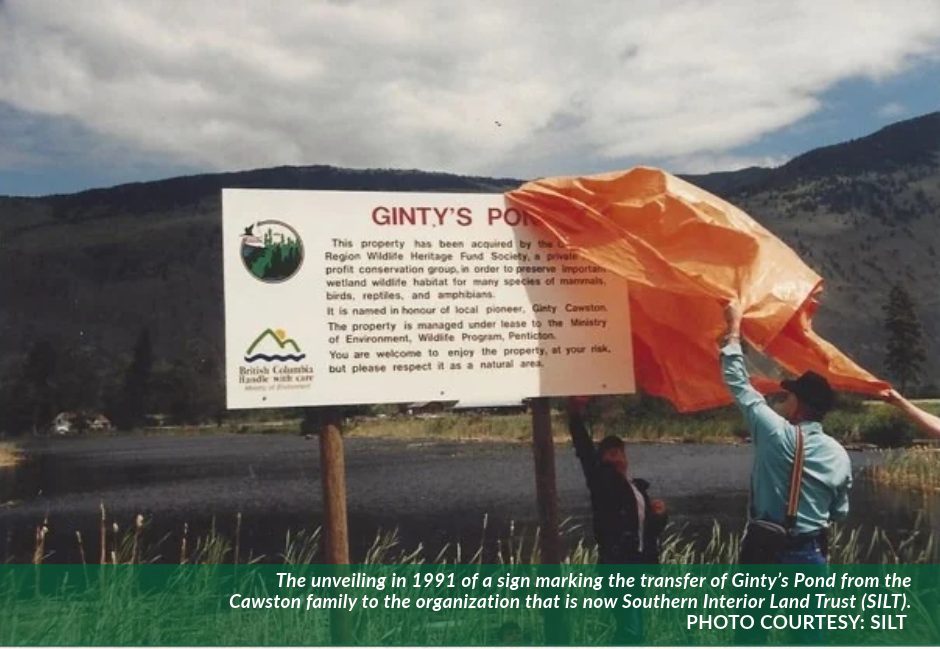
It was 1991, and Mark Cawston, son of Ginty Cawston, had just unveiled a sign marking transfer of Ginty’s Pond from the Cawston family to the now Southern Interior Land Trust (SILT). “Mark whispered to me”, recalls Al Peatt, SILT’s Executive Director, “Promise—you will always keep this pond in good shape for wildlife and for all the community to enjoy.” Al’s reply: “We will.”
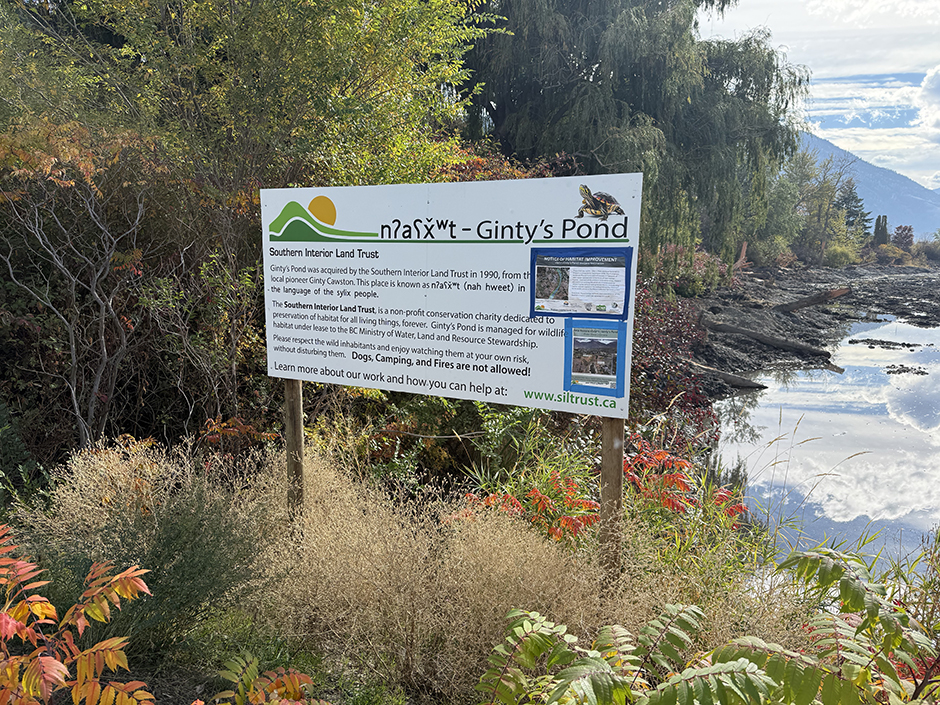
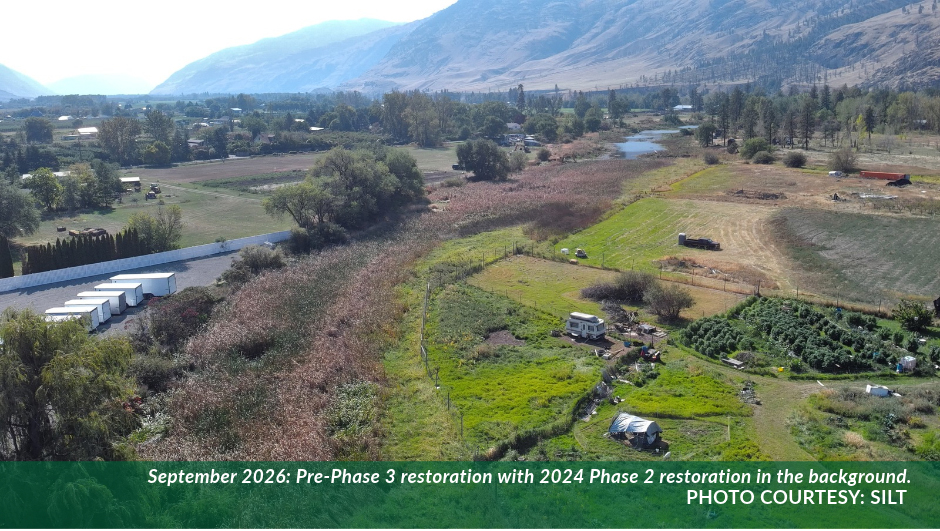
In 1991, the 6.3-hectare (15.6 acre) Ginty’s Pond was a beautiful open water marsh fringed with cattail. Its rich plant and animal life was plentiful, and the pond provided year-round recreation and cultural value to the surrounding community. Known as nʔaʕx̌ʷt (nah hweet) in the syilx language, Ginty’s Pond is in the Village of Cawston, within Smelqmix (Lower Similkameen Indian Band) territory, in the Similkameen River watershed of British Columbia.
nʔaʕx̌ʷt – Ginty’s Pond is an oxbow wetland that was separated from the main stem of the Similkameen River by natural processes over 100 years ago. Fifty years ago, a new flood control dyke fully separated the pond from the river. About 20 years ago, the pond began rapidly changing from a productive open water marsh to a monoculture of dense cattail with little open water—a probable result of shallowing, hydrologic change, and nutrient enrichment.
“The change alarmed us”, recalled Peatt, “The whole premise of conservation in perpetuity is based on a promise of trust—we had promised to keep the pond in good condition for wildlife forever.” Although ‘succession’ of a wetland from marsh to meadow is a natural process, in this case it was reducing the variety and quality of habitats and that was contrary to SILT’s purpose and promise.
“In a natural watershed, wetlands of all ages are present.” said Peatt, “Floods and erosion create new wetlands as old ones age out—that is no longer possible in the dyked and developed parts of the Similkameen River watershed.”
Since 2019, SILT has been working in a co-leadership role with the Lower Similkameen Indian Band, the BC Ministry of Water, Land and Resource Stewardship, and the BC Wildlife Federation to return all of nʔaʕx̌ʷt – Ginty’s Pond to a ‘younger’ more productive state.
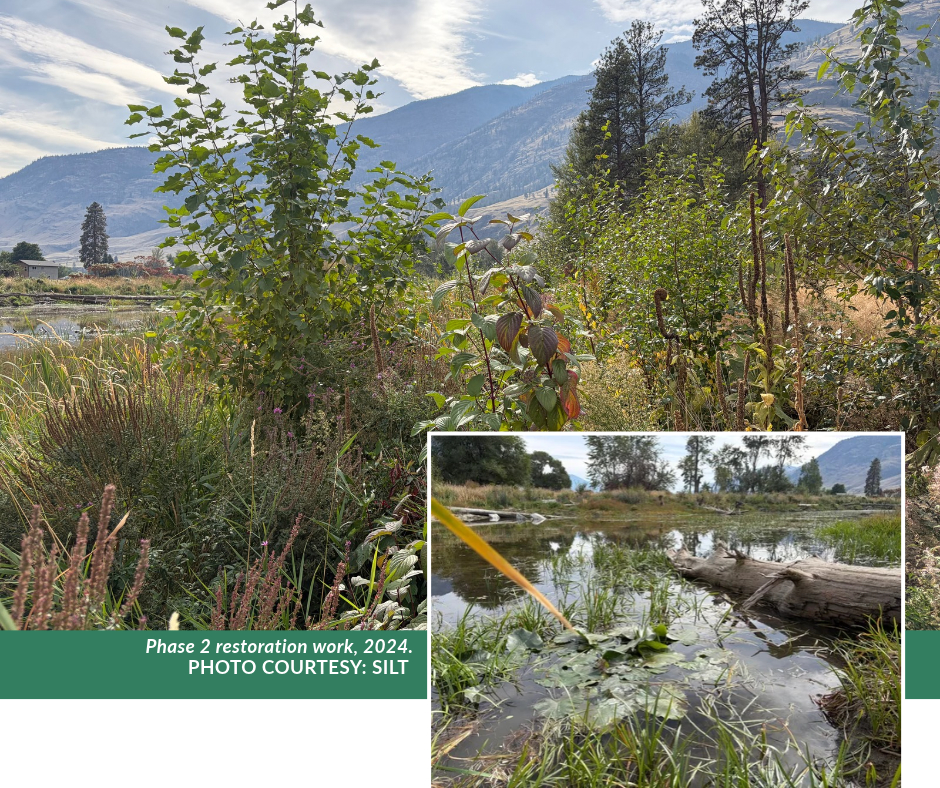
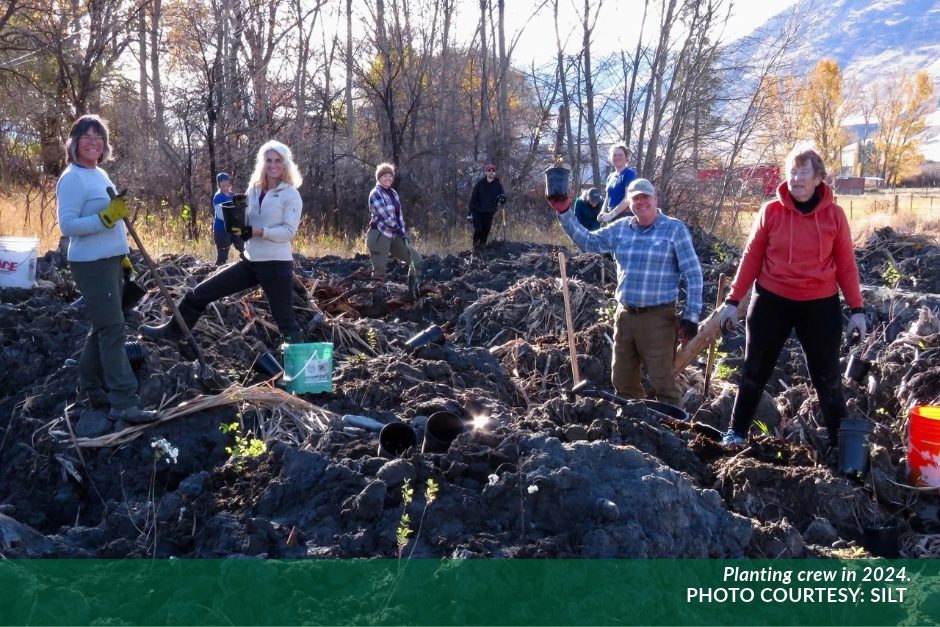
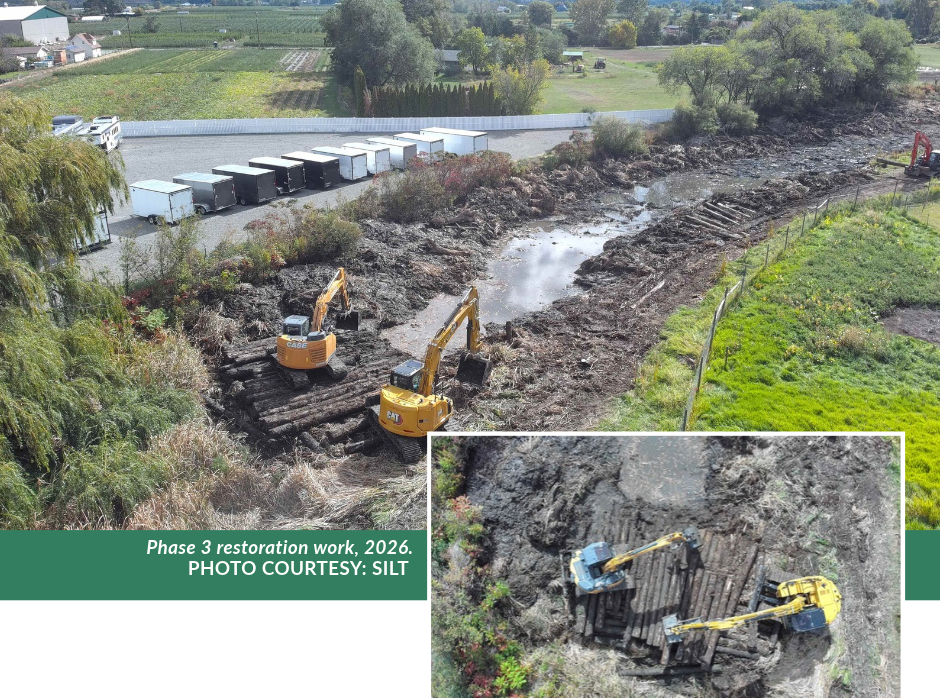
The work has been done in three phases over several years, with about two hectares restored during each phase. Each phase began with a smelqmix ceremony and sharing of traditional and cultural values with the community. Then, excavators dug out the cattail and sediments to deepen a channel and expose open water. In spots, riverbed gravel was put onshore for turtles to nest in. On the excavated soils, thousands of native trees and shrubs are planted and large wood ‘debris’ placed to create new riparian habitats for many species, including species-at-risk. “Our team is rebuilding a wetland but is also educating people about wetland ecology, wildlife, and about their own dependence on the health and security of the Similkameen River watershed,” said Peatt.
Why wetlands matter
As a wildlife conservation charity, SILT’s primary objective is to protect and restore productive wildlife habitats. Wetlands are more productive habitats than most, but they also provide other important benefits to their surrounding landscape and communities.
“Over 95 percent of wetlands that existed before European settlement in both the Lower Similkameen and South Okanagan valleys are gone,” says Peatt. “They were the sponges in the land that held water. They absorbed water during floods and released water during droughts. From a watershed perspective, the few remaining wetlands are very valuable.”
Though no longer connected directly to the Similkameen River, nʔaʕx̌ʷt – Ginty’s Pond continues to receive groundwater from its surrounding basin, with pond water levels responding to agricultural irrigation demands and Similkameen River flows throughout the year. “Our team wonders whether it’s feasible to reconnect the pond to its parent river and so help to re-establish that function of the greater watershed.” mused Peatt.
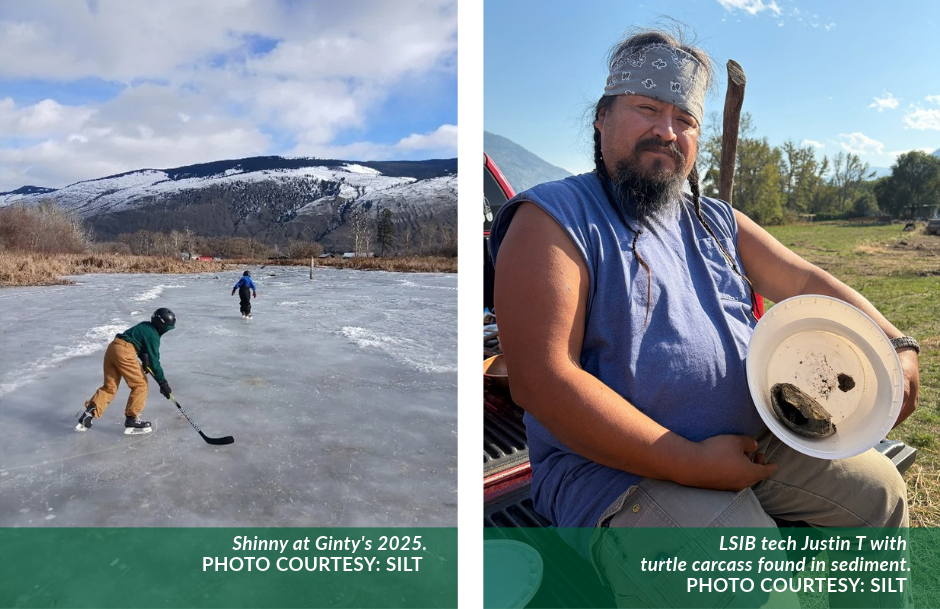
Restoration helps to rebuild community connections too. The site, and its history are culturally important to smelqmix people. Cattail and bulrush were traditionally collected here, and for ages the wetland has been a place to gather food and other materials.
The restoration is also returning lost recreation opportunities to the community. Many residents of Cawston recall skating with neighbours on the pond, or paddling, or feeling rejuvenated just by being close to wildlife and water. To some, restoring the pond has restored a sense of place and their interconnection to nature and the land. In effect, the pond has been an important gathering place for both people and wildlife.
Looking ahead
Machine work and site renewal at nʔaʕx̌ʷt – Ginty’s Pond will be completed this year but site monitoring and maintenance will be an ongoing effort. In 2027, SILT plans to install camera stations to observe wildlife activity and track vegetative changes over time. Community members will help through an iNaturalist project documenting the plants and animals they encounter.
SILT also hopes to continue working with LSIB and other partners to explore reconnecting nʔaʕx̌ʷt – Ginty’s Pond to surface flow in the Similkameen River or nearby Keremeos Creek. Restoring nʔaʕx̌ʷt – Ginty’s Pond is about more than returning open freshwater to the pond. It is improving wildlife habitat and cultural resource conditions, supporting watershed health and security, and helping maintain a landscape with deep cultural and community connections forever.
The latest phase of the nʔaʕx̌ʷt – Ginty’s Pond restoration was made possible with support from the Watershed Security Fund, the Province of BC, the Regional District of Okanagan-Similkameen, individual and corporate donors, and other community contributions. SILT is grateful for the support that makes this ongoing conservation work possible!
SILT’s other activities, from the wet to the dry!
Restoring nʔaʕx̌ʷt – Ginty’s Pond is just one aspect of SILT’s conservation work in the BC southern interior. Its primary focus is to acquire and conserve those jewels of habitat that act as “stepping-stones” for wildlife to move through and persist in our increasingly human-dominated landscapes. We seek the overlooked but productive and vital habitats likely to be developed and lost if not conserved. No other land trust in the southern interior is so directly focussed on habitat connectivity.
SILT’s operations are managed by a senior registered professional wildlife biologist and overseen by a dedicated board of volunteer directors. SILT is serious about its role and responsibilities—it is the only land trust in BC that has been awarded Conservation Excellence Certification from the national Centre for Land Conservation.
An upcoming initiative of SILT’s is to advance securement and protection of a physical wildlife movement corridor across the dry grassland/sagebrush-steppe on the lower slope of Anarchist Mountain east of Osoyoos in BC’s arid south Okanagan Valley. This ever-developing area is a national biodiversity hotspot, is an essential travel route for bighorn sheep, deer, and badger, and has habitats for dozens of species-at-risk. A secured and effectively maintained corridor using a combination of land acquisitions, easements, agreements, and owner education could extend (some day) from the International Border across the Crowsnest Highway, through SILT’s existing Bourguiba Spring Conservation Property, to the Anarchist Protected Area, and potentially beyond. Habitat securement here would meaningfully help wildlife to persist, and further achievement of Canada’s 30×30 goal for biodiversity protection. No one method of land conservation will succeed. SILT envisions a coordinated, collaborative effort between it and other organizations already working on educational awareness, habitat stewardship, and landowner contacts. Email SILT’s Executive Director Al Peatt apeatt@siltrust.ca for more information.
_____